
UK biodiversity collapse
& food insecurity.
HM Government and the UK Climate Change Committee identify biodiversity collapse, food insecurity, and heatwave/flood/drought defence as national security risks. Well-managed green spaces reduce all of them.
This mission also helps cost of living, air pollution, micronutrient deficiency, the mental health epidemic, nature connection — and creates green jobs.
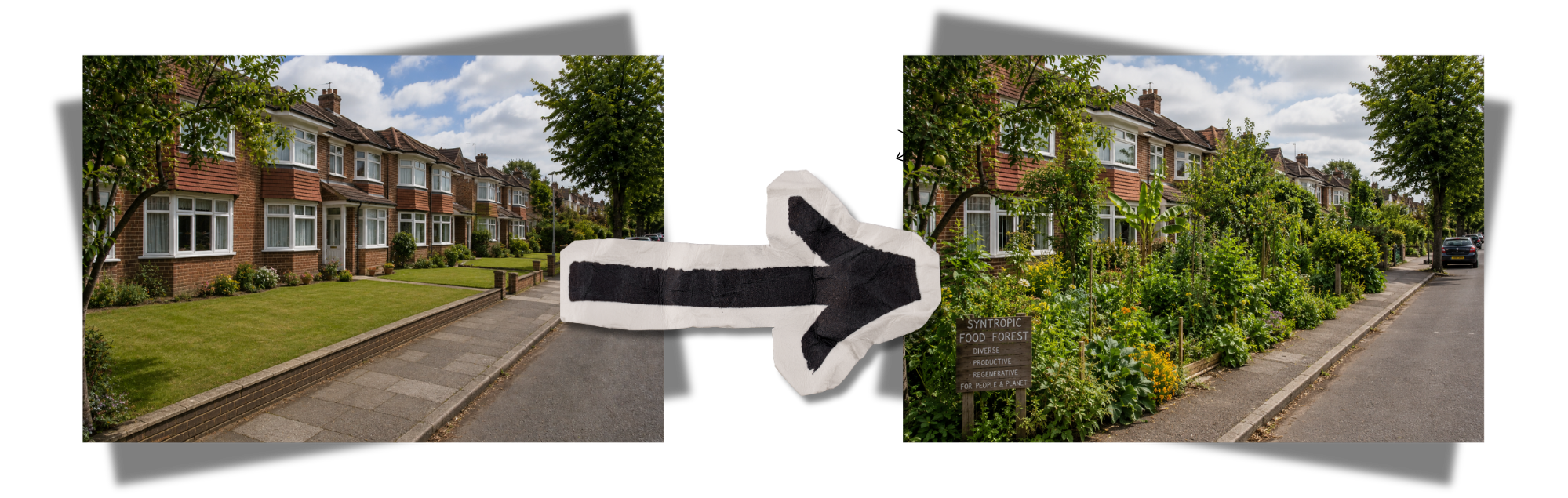
Turning suburban
lawns into food forests.
A scalable model to transform the UK's built environment for food security, biodiversity, climate resilience and community participation — powered by ESG funds and a national guard of gardeners.

"Finally," said Ms Hedgehog, "a place we can all call home."
Gardeners as essential
as doctors and sewage workers.
In 19th-century Britain, lawns symbolised wealth meaning they became popular. In 21st-century Britain, space is scarce. There's more land in private gardens than nature reserves.
Decentralised food production from existing land.
Native plants, ponds and habitat in every garden.
Fresh food, nature connection, mental wellbeing.
Flood, drought & heatwave defence at street level.
Neighbours sharing food, knowledge and labour.
How it works.
Corporations and government unlock ESG funds for eco-garden conversion and maintenance.
Homeowners, housing associations and landlords join via the official site for a free upgrade.
A local consultant visits, completes a baseline biodiversity survey and plans the upgrade using syntropic agroforestry — £1,000 budget per garden.
Materials sourced from local nurseries; gardeners complete the installation.
Gardeners visit weekly/fortnightly, logging biodiversity data through a digital portal.
Food feeds the household; excess is sold, shared with neighbours, or donated to food banks and schools.
Royal Borough of
Windsor & Maidenhead.
We're already embedded in RBWM's environmental and community networks. High garden ownership, strong networks, urban/suburban mix, visible flooding and biodiversity pressures — the ideal market-town template.
- · Find 10 households willing to sign up
- · Gardening capacity, tools and training already in place
- · Hire a marketing & admin lead
- · Raise £25k of ESG funding
£25k. 10 gardens. 6 months.
Every pound traceable. Local nurseries, local labour, open data.
| Garden upgrades (local nurseries) | £10,000 |
| Gardener — 15 hrs/week × 26 weeks | £7,800 |
| Install days × 10 (7 hrs each) | £1,400 |
| Garden design consultancy (5 hrs/garden) | £1,000 |
| Marketing & admin (8 hrs/week × 26 weeks) | £4,160 |
| Insurance | £500 |
| Web tools (donated) | £240 |
| Emergency / contingency | £900 |
| Total | £25,000 |
With £27.6k raised, we can pay residents £20/week to monitor biodiversity — reducing the gardener bill and putting £520 back into each participating household.
A model designed to scale.
- · Find 10 gardens
- · Recruit first gardener + admin
- · Secure ESG partner (£25–27.6k)
- · Launch social & outreach
- · Begin first 10 gardens
- · Measure initial impact
- · Raise £100k
- · Expand team
- · 50 gardens across Berkshire
- · TV show + case studies
- · Before/after data
- · Raise £1m
- · Gardens across the UK
- · National training framework
- · Council & corporate partnerships
- · Green employment network
What replaces the lawn.
Syntropic agroforestry methods turn each plot into a layered, productive ecosystem — beautiful, edible, and built to last.